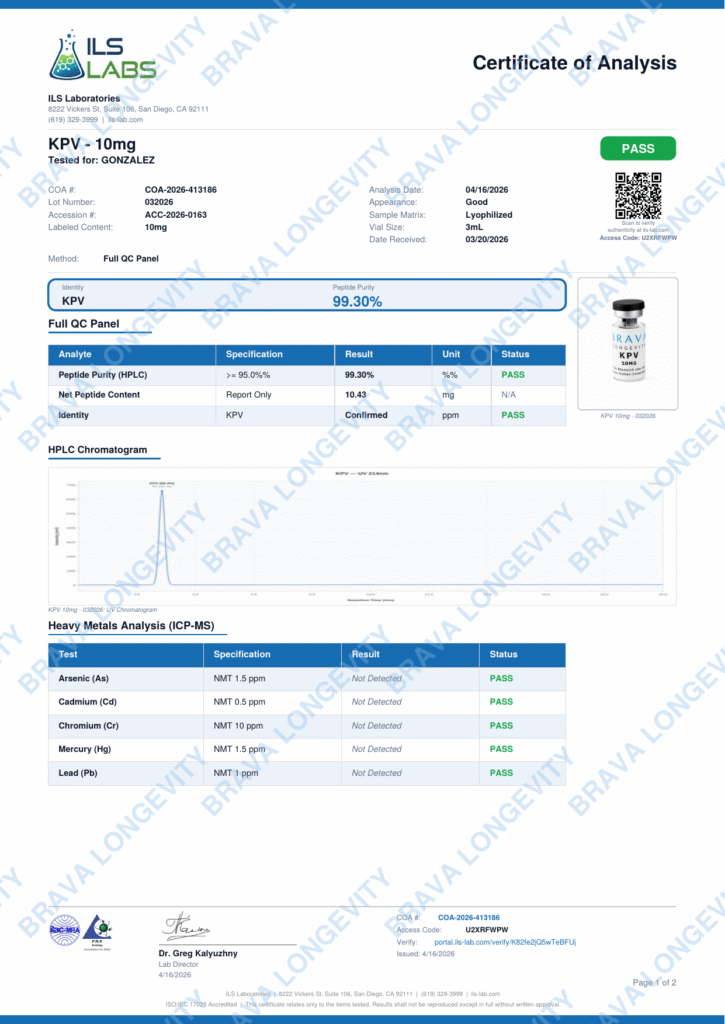
KPV 10mg — Anti-Inflammatory Signaling Research Peptide
KPV (Lysine-Proline-Valine) is the smallest active fragment of alpha-melanocyte-stimulating hormone, made up of just the final three amino acids of the parent 13-residue neuropeptide. Researchers first identified this fragment’s activity in the late 1980s, when systematic testing of alpha-MSH sub-sequences showed that KPV retained the parent hormone’s anti-inflammatory signaling without triggering melanocortin-receptor-driven pigmentation effects (Hiltz & Lipton, 1989).
NF-kB & Inflammatory Pathway Research
The core of the KPV literature focuses on its ability to suppress NF-kB nuclear translocation, a master switch for inflammatory gene expression. Research has proposed a receptor-independent mechanism in which KPV blocks the importin-alpha pathway that NF-kB’s p65/RelA subunit uses to enter the cell nucleus (Land et al., 2012), distinguishing it mechanistically from classical melanocortin-receptor agonists.
Mucosal & Gastrointestinal Research
KPV has been studied extensively in intestinal epithelial models, where nanomolar concentrations reduced pro-inflammatory cytokine output in research relevant to gut-barrier and mucosal-inflammation studies (Dalmasso et al., 2008).
Dermatological & Cytokine Research
Additional research has examined KPV in models of contact dermatitis and airway inflammation, with researchers noting its small size and oral stability as advantages for structure-activity research relative to full-length alpha-MSH.
Best For: Inflammatory Signaling / Immune Research
For Research Use Only (RUO). Not for human or veterinary use. Not a drug. Not intended to diagnose, treat, cure, or prevent any disease.